What are broadcast graphics and why they make the difference in sports production
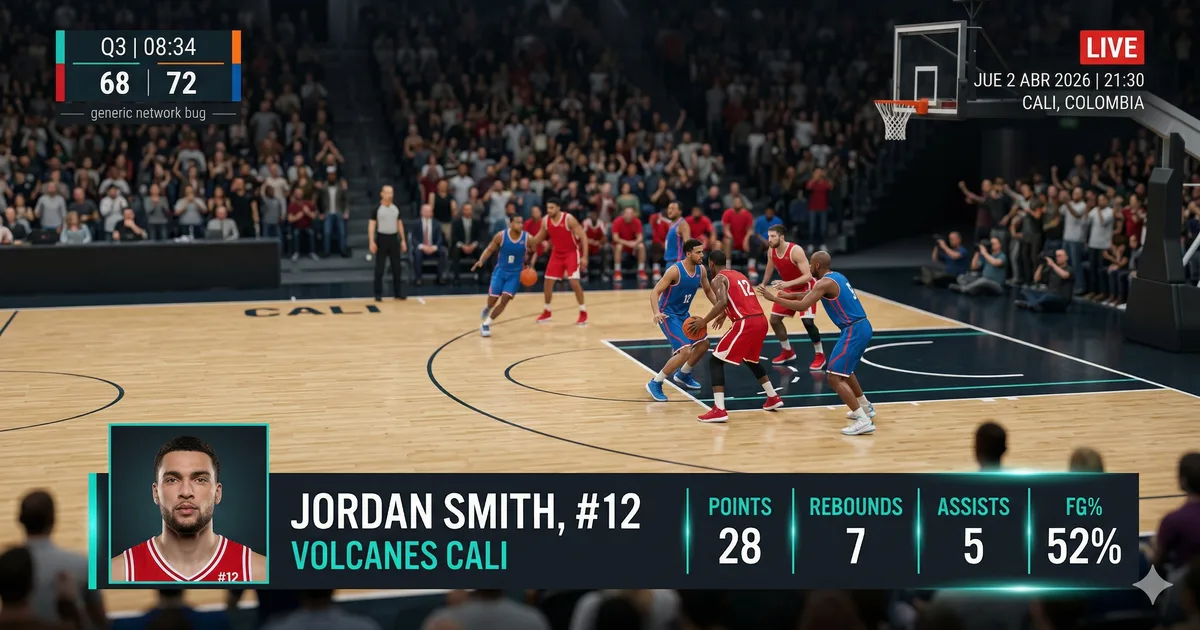
When you watch a basketball game on television and a player’s name appears at the bottom of the screen along with their statistics, that’s a broadcast graphic. When the scoreboard stays in the corner throughout the game, that’s also a broadcast graphic. They’re such a part of the experience that viewers take them for granted — and that’s exactly the goal.
The main types of broadcast graphics in sports
Scorebug or on-screen scoreboard: The most important graphic in any live sports production. Shows the score, game clock, period or quarter, and in sports with more information also fouls, possession and timeouts.
Lower third: The graphic that appears in the lower third of the screen to identify a player, coach, referee or commentator.
Fullscreen: Graphics that occupy all or most of the screen — team presentations, standings tables, comparative statistics.
Ticker or crawl: The text bar that moves horizontally across the bottom of the screen with results from other games or event information.
Bumper: A short, usually animated graphic used as a transition.
The difference between a production with and without professional graphics
It’s not just aesthetics. The scorebug eliminates the need for the commentator to repeat the score every thirty seconds. The lower third contextualizes who’s on screen without interrupting the narration. Full-screen statistics give the viewer information that commentators don’t have time to verbalize.
A production without professional graphics forces the viewer to work harder to follow the game. A production with good graphics lets the viewer focus on the play.
How they work technically
Modern broadcast graphics are web pages — rendered in a browser and captured as a transparent layer over the video signal. The operator controls which graphic is active, what information it shows and when it appears or disappears, from a control panel.
Transparency is the key: the background of the graphic is completely transparent, so only the graphic element is visible floating over the video.
Why system quality matters
Not all graphics systems are equal. The differences that matter in real production are: response speed, stability, and flexibility to adapt to the specific sport and client. A system designed specifically for sports production, with sport-specific specialized consoles and real-time data integration, makes the difference between operating under stress and operating with fluidity.