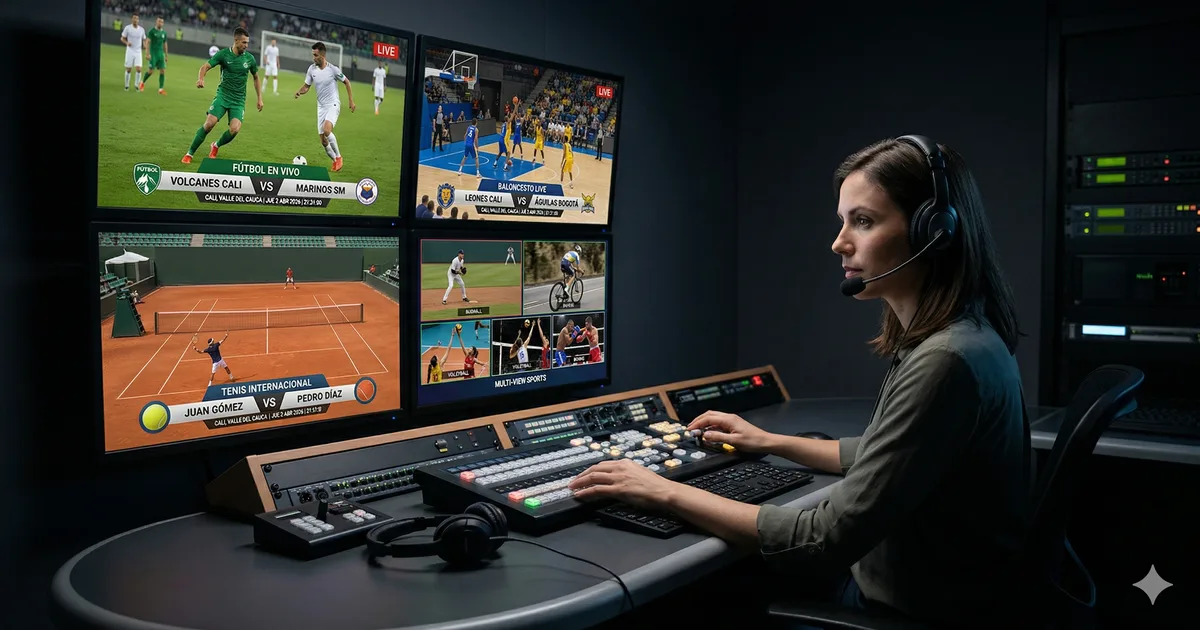
How to cover Multi-sport Games with a small production team
Multi-sport Games are the most demanding format in sports broadcast production. Not because each sport is complicated in itself, but because they’re all complicated at the same time.
The good news: with the right system, a small team can cover an event of this scale with professional quality.
The most important decision: system architecture
Before the event, the decision with the most impact is how the system is technically organized. A monolithic system is fragile and doesn’t scale. A system of independent sessions — where each sport is an autonomous unit — is robust and scales without limit.
Planning: the work done before
80% of the work for Multi-sport Games is done before the first event. A time-saving tool: a shared Google Sheets template with the technical directors of each sport so they can load their own data.
Operator assignment: who covers what
The ideal assignment considers: technical difficulty of the sport, expected audience, and schedule overlap. In very large events, some sports can operate with automatic data integration and minimal supervision.
Communication during the event
A communication channel between all active operators is as important as the technical system. Problems are solved as a team.
The first thirty minutes: the most critical moment
The simultaneous start of several sports is the highest-stress moment. The solution is one: everything must be verified beforehand. No exceptions.
Verification checklist per session (complete 30 min before event):
- Event data loaded and verified
- Data integration active and receiving correct information
- All templates tested with IN and OUT
- OBS/vMix with Browser Source configured and working
- Operator confirmed at position
- Communication channel active
What to automate and what not to
Automate: scoreboard updates, clock, fouls and possession when data integration is available. Don’t automate: the decision of which graphic goes on air at each moment. That decision requires editorial judgment.